Your Next Premium Buyer Already Has a Ticket

Getting butts in seats will always be the job. Every sold-out show, packed student section, and full house on a Tuesday night starts with a great ticketing strategy, and the organizations we work with are very good at it.
But look closely at the people in those seats and you’ll find something valuable: fans who would happily spend more for a better experience. Club access, a suite with clients, a lounge before the game. Many of your future premium buyers are already in your database, waiting for the right invitation.
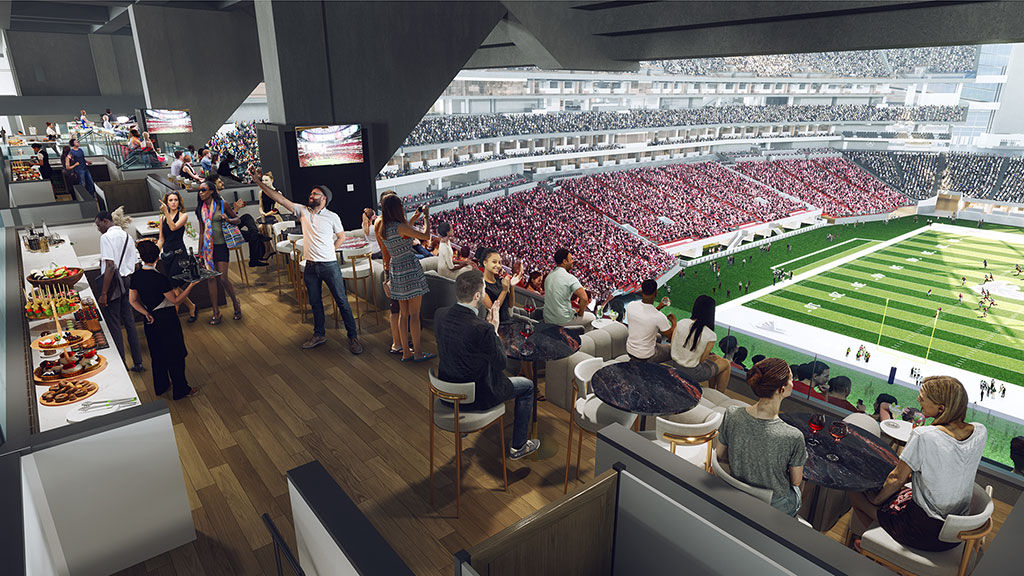
That group is bigger than it used to be, because premium itself has changed. It once meant a handful of suites and a club level sold mostly to corporate accounts. Today it also includes rooftop terraces, social clubs built around bars and lounge seating, pitch side and courtside suites, dedicated group spaces, and single-event hospitality packages. More formats at more price points means more fans who can realistically say yes.
The question isn’t whether that demand exists. It’s whether your premium offer is reaching the right people at the right moment. That’s where digital advertising, built on your own ticketing data, makes the difference. Working as an extension of your team, Paciolan helps turn the ticket-buying momentum you’ve already built into premium revenue. Here’s what that looks like in practice.
Match the offer to the Buyer
Every premium product has its own buyer, and the strongest campaigns treat them differently. A company booking a suite to host clients makes a very different decision than a couple adding lounge access to a Broadway night. Before a single ad runs, map each premium product to the fans most likely to buy it and the data that can find them.
Premium product | Who’s buying | Where to find them |
Suites | Businesses hosting clients or rewarding employees | Past suite and corporate buyers, plus lookalikes |
Season-long clubs and memberships | Loyal fans who attend often | Season ticket holders and frequent single-game buyers |
Single-event clubs and lounges | Fans planning a special night out | Recent buyers for that specific show or game |
Group spaces and outings | Schools, teams, clubs, and community groups | Past group leaders and organizational contacts |
What makes a premium campaign work
First-party data does the targeting. Your ticketing and CRM data is the most accurate signal you have. Past premium buyers, season ticket holders, frequent single-game buyers, and group leaders can all become custom audiences on Meta and Google. Lookalike audiences built from those lists find more people just like them, and affinity and income layers sharpen the focus further. The result is ad spend aimed at fans who have already shown up, not at everyone in the market.
Video sells the experience. Premium buyers want to see exactly what they’re getting: the view, the menu, the private entrance, the people they’ll be sharing the night with. Vertical video built for Reels and Stories puts those details in front of fans in seconds and does more work than any amenities list. The best creative also feels welcoming rather than exclusive, more of an invitation than a velvet rope.
A frictionless path turns interest into revenue. Premium decisions often start on a phone, so every step after the tap matters. Send fans to a mobile landing page that matches the ad they just saw, with the space, what’s included, and pricing right up front. Give them more than one way to say yes, whether that’s reserving with a deposit, requesting a quick call, or filling out a short lead form without leaving the app. Then close the loop: get new leads to your sales team right away, and retarget anyone who showed interest but didn’t finish.
Measurement proves what’s working. Reporting built around premium goals, like deposits, leads, and package sales, shows what a campaign actually delivered beyond clicks and impressions. That level of detail shows which audiences and creative are earning their budget, so every campaign gets smarter than the last.
Fox Theatre Atlanta: Marquee Club
The goal: Grow Marquee Club sales among an audience that already loves a night at the Fox.
The approach: A two-part strategy on Facebook and Instagram. First, a 60-second video built awareness among Broadway and performing arts fans, the Fox’s social followers, and lookalikes of current Marquee Club members. It delivered nearly 239,000 impressions and 19,572 clicks at an 8.2% click-through rate, well above typical paid social benchmarks. The video also earned more than 1,700 reactions and 568 complete views, mostly on Reels.
Second, a retargeting campaign put the Club Terrace and Club Lounge in front of recent Hamilton ticket buyers, fans who had just committed to a big night out and were primed for an elevated version of it.
The results: The retargeting campaign generated $28,056 in Marquee Club revenue from fans who had already proven they’d show up for a big night out.
Pittsburgh Riverhounds SC: Suites and Group Outings
The goal: Drive suite and group sales from two distinct buyers: businesses looking to host and organizations planning a group outing.
The approach: Two creative concepts, each built for its audience. The suite ad features the rooftop terrace and Pittsburgh skyline, speaking to companies entertaining clients, teams rewarding employees, and fans hosting friends and family. The group ad targets schools, clubs, and community organizations. Both ran on Meta and Google Demand Gen, with a FEVO deposit flow so buyers could secure their package directly from their phone.
The results: In about three weeks the campaign drove more than 90,000 impressions, 646 clicks, and 24 deposits on premium and group packages. The standout was the audience built from the Riverhounds’ own list of past premium and group buyers, plus lookalikes. It produced 21 of the 22 Meta conversions at roughly a 6x return, on deposits alone, before full packages close. Demand Gen complemented it with twice the clicks and a higher click-through rate, keeping new prospects entering the funnel.
University of Michigan: UMCU All Star Lounge
The goal: Sell All Star Lounge access to the Michigan fans most likely to upgrade.
The approach: Rather than relying on a single audience, the campaign ran four in parallel: Michigan’s current CRM list, lookalikes of past All Star Lounge prospects, a list built from last season’s social campaign, and football fans refined with an income layer. A 30-second video showcased the lounge experience.
The results: The campaign delivered 138,424 impressions, 2,039 clicks at a 1.47% click-through rate, and around 1,500 complete video views. Fans also saved the ad 11 times, a strong signal for a considered purchase like premium. Most importantly, it turned that attention into 9 confirmed All Star Lounge sales worth $4,290.
Where to start, and when
Pick your moment, because in live entertainment, timing is half the pitch. A Broadway tour announcement, a rivalry game, a home opener, a playoff run, an artist everyone’s buzzing about. Each one opens a window when fans are already excited and more willing to upgrade.
Add the predictable moments too, like the days right after an on-sale, season ticket renewals, and corporate budget planning. That way your premium offer shows up exactly when fans are ready to say yes.
Let's build your next premium campaign
Growing premium revenue is both an art and a science. It’s about knowing your buyers, showing them the experience, timing the ask, and measuring what actually sells.
Let’s turn your ticket buyers into your next premium members. Reach out to your PAC contact today to build a campaign that puts your best seats in front of the fans most ready to upgrade.
As we head into the stretch when corporate hospitality budgets get set and fans start planning their next big night out, explore these additional resources:
Have questions or want to plan ahead? Connect with your PAC Digital Marketing rep to map out your next premium push before renewal season.


