Beyond the Seat: How Live Events Are Selling Unforgettable Experiences


A ticket gets a fan through the gate. An experience is what they talk about on the drive home.
Live events have always sold more than seats. They sell tradition, access, and the feeling of being part of something. More organizations, from athletic departments to theaters and pro sports, are now packaging that feeling into products fans can buy: a lunch with the head coach, a photo on the field, a round of golf inside the stadium. These offers add revenue, but they also deepen loyalty in ways a seat upgrade can't.
The opportunity is real, and so is the challenge. A one-of-a-kind experience only works if the right fans hear about it at the right moment. That's where digital advertising, built on your own ticketing data, does the heavy lifting. Here's how seven organizations are turning gameday into something fans remember, and how they're getting the word out.
Minnesota: Minnesota Memories
The experience: Minnesota Memories gives fans a menu of elevated gameday add-ons instead of a single package. Fans pick the moment that fits them, from upgraded access to once-a-season extras, and buy it right alongside their tickets on PAC Live.
Why it works: Choice lowers the barrier to saying yes. A family, a lifelong alum, and a group of friends all want different things from a Saturday, and a menu lets each of them build their own day. Selling through PAC Live keeps the purchase in the same flow fans already use for tickets, so there's no extra step between interest and checkout.
The takeaway: Think of experiences as a product line, not a one-off. A range of options at different price points reaches more of your fan base.
Alabama: Tide Talk
The experience: Tide Talk invites fans to a pregame lunch and a conversation with the coach. It's the kind of access most fans only see on TV: hearing the game plan, the stories, and the personality behind the program, up close.
Why it works: Access is the most valuable thing an athletic department owns, and it can't be bought anywhere else. Pairing it with a meal turns a short appearance into a full, relaxed experience fans will remember for years. It also builds a personal connection that pays off at renewal time.
The takeaway: Your coaches and people are part of the product. A little time from the right person can become one of your most compelling offers.
Fox Theatre Atlanta: Marquee Club
The experience: The Marquee Club turns a Broadway night into an evening. Guests get three levels of lounge space open before, during, and after most shows, complimentary pre-show dining from a seasonal menu, private restrooms, and access to the rooftop. Higher membership tiers add a backstage tour, a members-only Chef's Night, and signature events like Bourbon Bash.
Why it works: The club solves the small frustrations of a big night out: the rush to find dinner, the long restroom line at intermission, the crowded lobby. It replaces them with space to relax and a place to linger. Members can buy for a full Broadway season or a handful of shows, so the commitment fits how often they actually attend.
The takeaway: Club access is an experience, not just an amenity. When the space has its own story, a historic venue, a rooftop view, a members-only night, fans aren't upgrading their seat. They're upgrading their whole night.
Georgia: Topgolf in the Stadium
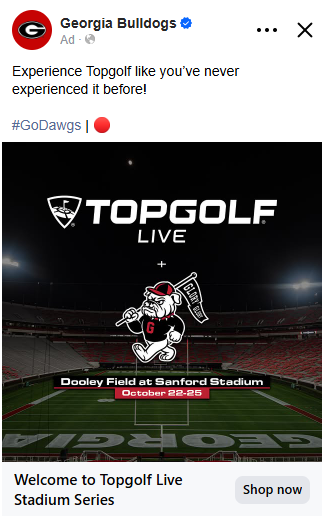
The experience: UGA brought Topgolf into its football stadium, letting fans tee off inside one of the most iconic venues in college football. No game required.
Why it works: It puts your venue to work on non-gamedays and reaches people who might never buy a football ticket. Golfers, corporate groups, and casual fans all get a reason to visit. And once they've stood on that field, they're far more likely to come back on a Saturday.
The takeaway: Your stadium is an asset 365 days a year. A creative partnership can turn an empty venue into a destination and a new audience into future ticket buyers.
BYU: Gameday Experiences
The experience: BYU offers fans a behind-the-scenes look at gameday: sideline access, a photo on the field, and tours of the locker room.
Why it works: These moments let fans step into spaces usually reserved for players and staff. Each one is built to be shared, too. A field photo or a locker room selfie ends up on social media, which turns every buyer into a small ad for the next one.
The takeaway: Behind-the-scenes access doesn't need a big build-out. Spaces you already have, opened up at the right time, can become a premium product.
PBR: San Diego Elite Seats
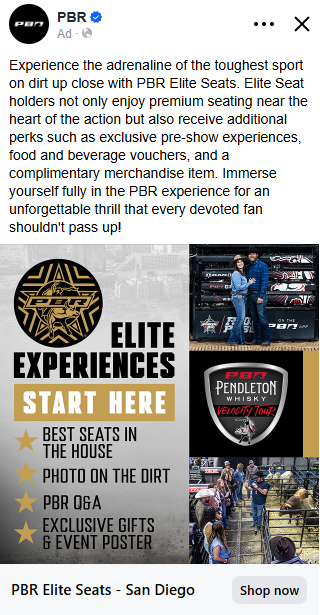
The experience: PBR Elite Seats bundle the best seats in the house with a night of extras. Fans get a photo on the dirt, a Q&A with PBR talent, food and beverage vouchers, and exclusive gifts, including a commemorative event poster.
Why it works: Each perk adds a different kind of memory. The seat delivers the adrenaline, the Q&A delivers the inside story, and the photo and poster give fans something to share and keep long after the last ride. Bundling them into one ticket makes the decision simple: one purchase, a complete night.
The takeaway: You don't need a new space to create a premium experience. Package great seats with access, a photo moment, and a keepsake, and a ticket becomes a story.
Purdue: Women's Basketball Brunch
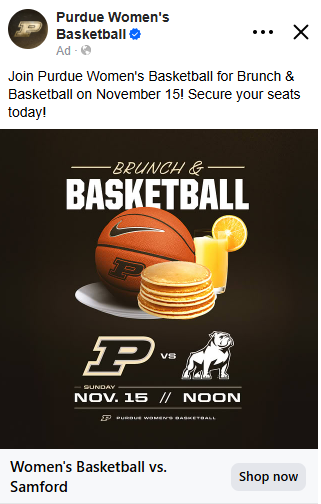
The experience: Purdue pairs women's basketball games with brunch, turning a game into a full morning or midday outing.
Why it works: Brunch is social by nature. It gives friends, families, and groups a reason to make a day of it, and it fits the earlier tip times that are common in women's basketball. It also gives a growing sport its own signature experience, helping build a dedicated fan base rather than relying on spillover from other teams.
The takeaway: Experiences aren't just for football. A simple, well-matched add-on can give any sport its own identity and a new reason to attend.
How to market your own experiences
A great experience still needs the right fans to find it. Here's what the strongest campaigns have in common.
Match each experience to its buyer. A coach's lunch, a field photo, and a stadium golf outing all appeal to different fans. Map each one to the audience most likely to buy before an ad runs.
Experience type | Who's buying | Where to find them |
Coach access and hospitality | Loyal fans, donors, alumni | Season ticket holders, donor lists, past premium buyers |
Behind-the-scenes access | Families and first-time visitors | Single-game buyers, youth and group ticket buyers |
Venue events (like Topgolf) | Casual fans and corporate groups | Lookalikes, local interest audiences, group leaders |
Sport-specific add-ons | Fans of that team and social groups | Past buyers for that sport, plus lookalikes |
Show it, don't list it. Experiences are visual. Short vertical video of the field, the lunch, or the locker room does more work than any list of perks. Make it feel like an invitation.
Keep the path short. Send fans from the ad straight to a mobile page where they can see what's included and buy, ideally in the same checkout they use for tickets.
Time the ask. Push experiences when excitement peaks: the schedule release, a rivalry week, a big home game, or the days right after fans buy their tickets.
Let's build your next experience campaign
Fans don't remember every score. They remember the lunch with the coach, the photo on the field, and the day they teed off in the stadium. Those moments build loyalty that lasts long after the season ends.
Reach out to your PAC contact to turn your best gameday moments into experiences fans can't wait to buy, and a campaign that puts them in front of the right people.
Looking for more ideas? Explore these resources:
Have questions or want to plan ahead? Connect with your PAC Digital Marketing rep to map out your next premium push before renewal season.


